Best Countertop Blenders for Your Kitchen
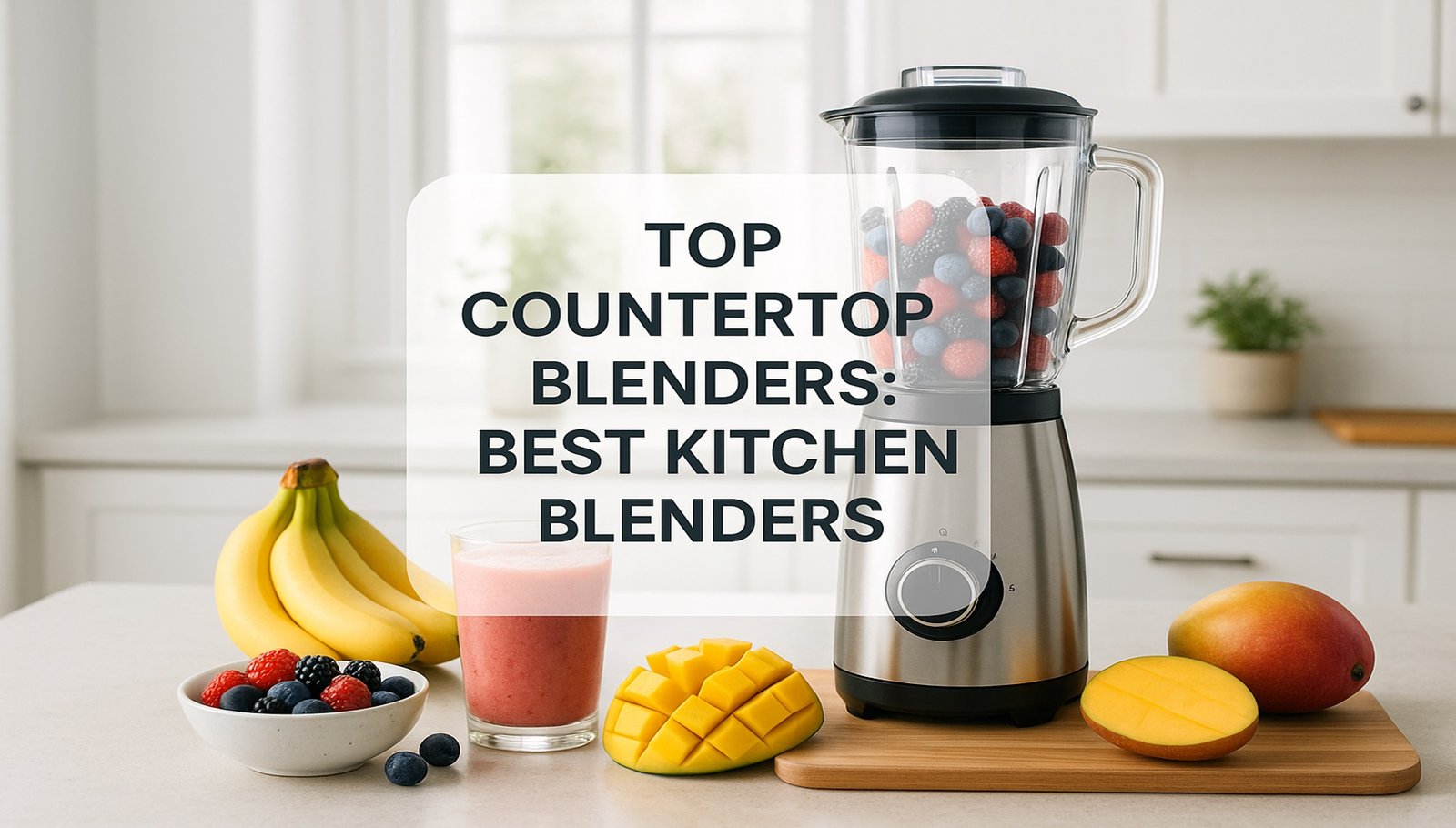
Choosing the right countertop blender can transform your kitchen routines – from whipping up morning smoothies to pureeing soups. A countertop blender is “the classic kitchen appliance featuring a motor base beneath a jar with blades inside,” ideal for mixing, blending, chopping and more. These versatile machines handle everything from smoothies and milkshakes to sauces and frozen drinks. When shopping, key factors include motor power, pitcher size and material, speed settings, and special features. For example, KitchenAid notes that if you plan green smoothies with tough ingredients (like kale) or frozen drinks, you should pick a higher-powered blender such as their K400 or Pro Line series. Jar design also matters: durable Tritan pitchers (BPA-free) are common, and rounder jar shapes promote better ice circulation, yielding smoother blends. In short, think about what you’ll blend most often – and match the blender type to those needs.
According to Consumer Reports, choosing the right blender depends on your specific needs – from making smoothies and frozen drinks to preparing soups and nut butters. Their tests show that motor power, jar design, and blade quality all play a crucial role in performance. With so many models on the market, understanding these features helps you select the countertop blender that fits your kitchen best.
Countertop blenders now come in many styles and sizes. There are compact personal/smoothie blenders for one or two servings, standard all-purpose blenders (mid-range power and capacity), and powerful heavy-duty models (1000–1500W motors). High-end machines often feature over 1200 watts and multiple speed programs. “Heavy duty blenders operate on 1000-1500 watts and achieve a much higher blade speed” – they can pulverize frozen fruits, nuts (for nut butter), and even grind grains into flour. These super blenders excel at everything all-purpose ones do, including crushing ice for fluffy frozen drinks and silky “green” vegetable smoothies. On the other hand, smaller personal blenders (14–24 oz jars) usually use 200–400W – enough for soft fruits and basic smoothies. Some top personal models push that much higher: for example, Bon Appétit notes that the Nutribullet Ultra personal blender (1,200W) “cut through everything we threw at it with shocking ease” – blending frozen fruit and kale into a creamy smoothie in seconds.
Below are recommended blender models for different needs, followed by practical buying and usage tips and a FAQ section.
High-Speed and Heavy-Duty Blenders
High-speed blenders are the workhorses of the kitchen – ideal for large batches, hot soups, green smoothies and crushing ice. These typically have 1000+ watt motors and come with large (48–64 oz) jars. They can even make nut butters or flour. For example, heavy-duty models “excel at everything the all-purpose blenders can do, and also do several things that smaller blenders cannot,” including turning ingredients into perfectly smooth purees. In our tests, powerful blenders like the Vitamix and Blendtec series not only blended vegetables and fruits into silky soups, but handled tough jobs like blending frozen drinks without chunks.
- Vitamix 5200 – Classic 64-oz professional blender (1380W) known for reliability and performance. Its variable speed and heat-resistant jar make it ideal for soups, smoothies and hot sauces.
- Blendtec Designer Series – 1560W blender with pre-programmed cycles. The square “WildSide+” 90-oz jar has a wide bottom for powerful vortex blending. Includes self-cleaning mode for easy cleanup.


Each of these high-speed models can handle hard ice and fibrous veggies. They often come with extras like tamper tools or multiple preset programs. If volume and versatility are important (e.g. batch smoothies or whole soups), a heavy-duty blender is worth the investment.
Personal-Size Blenders (Smoothies on the Go)
Personal blenders are compact, single-serve machines built for convenience. They typically include 12–32 oz travel cups or to-go lids so you can blend and sip from the same container. These smaller blenders shine for making individual smoothies, protein shakes or small batches of sauces. As Bon Appétit notes, “even the best full-size blenders are less effective making single-serving smoothies or small-batch soups,” so using a mini “bullet” blender can save time and cleanup.
Personal blenders tend to be less powerful (often 600–900W), but the best ones still pack a punch. For example, Ninja’s Nutri Pro (1100W peak) can crush ice and hard fruits just like larger blenders. In tests, the 1200W Nutribullet Ultra handled kale and frozen berries effortlessly – something few lower-powered machines could do. If you mostly blend for 1–2 people or need portability, consider these:
- Ninja BN401 Nutri Pro – 1000W personal blender with two 24-oz to-go cups and one-touch smoothie/ice programs. Stainless extractor blades power through ice and veggies.
- Nutribullet Ultra – 1200W personal blender (most powerful Nutribullet model) with multiple jar sizes. Its blade and motor cut fibrous greens smoothly. Includes handled and handled travel cups.


These personal-size blenders are compact and easy to store, making them great for small kitchens or travel. Just note their smaller jar capacity – they’re ideal for 1–2 servings. Many also include suction feet for stability, simple controls, and dishwasher-safe parts for quick cleaning.
Quiet Blenders
Blender noise can be a deal-breaker for many. In recent years, manufacturers have introduced noise-suppressed designs for home use. For instance, Breville’s Super Q blender is designed with acoustic insulation and a cooling system to dampen sound. Breville even markets it as “Super Quick, Super Quiet”. Independent tests confirm this: Allrecipes reports that “the Breville Super Q is the quietest blender we tested,” thanks to its special noise-suppression features. Breville explains that its unique cooling system “reduces operating noise, optimizing this super blender for the home”.
- Breville Super Q – 1800W powerful blender with noise suppression. Comes with a 68-oz BPA-free jar plus a personal smoothie cup. High-end but very quiet and efficient.
- Vitamix Quiet One – (Commercial-grade, if available) Built inside a sound enclosure. Extremely quiet on high speed (over 1200W motor). Ideal for serious blender users who need noise reduction.


While quiet blenders like these often cost more, they let you blend early in the morning or late at night without waking the house. If noise is a concern, look for models with sound shields, silicone dampers, or multi-layer jars. Otherwise, portable personal blenders (like Ninja’s Blast) tend to be fairly quiet too, since they use smaller motors and enclosures.
Blenders for Smoothies & Frozen Drinks
If smoothies and frozen drinks are your main goal, pay attention to jar and blade design. Good smoothie blenders will include sharp blades and strong pulse functions for ice. They often package extra travel cups or smoothie programs. KitchenKapers notes that “jar design is a huge factor on how effectively a blender can crush ice” – for example, round, wide-bottom jars keep ice in the vortex for even crushing. Also look for models with specific “ice crush” or smoothie presets.
- KitchenAid K150 3-Speed Ice Crusher – Affordable 3-speed blender with 60-oz BPA-free jar. Allrecipes found it excelled at crushing ice, blending a frozen margarita mix completely in just 14 seconds. A compact, lightweight pick for smoothies and frozen drinks.
- Oster Pro 1200 – 1200W 7-speed blender with 6-point stainless steel blade. Includes a 24-oz smoothie cup. Its powerful motor and dual-direction blade technology easily crush ice and frozen fruit. (Oster notes it was designed for smoothies and ice-blended drinks.)


These models handle fruit smoothies and frozen concoctions very well. For ultra-smooth results from leafy greens or ice, you’ll want at least 1,000W and a sturdy jar. If you’re blending creamy frozen drinks daily, a heavy-duty machine like the Breville or Vitamix (mentioned above) will also serve brilliantly – just remember that higher power often means more noise (hence the quiet section).
Check out also our 10 Best Hand Blenders for Smoothies, Soups & More.
Tips for Choosing and Using a Blender
- Match power to your use: If you only make soft-fruit smoothies, a 500–700W blender may suffice. For daily green smoothies, soups or ice crushing, choose 1000W+. As KitchenAid advises, higher power handles fibrous greens and frozen drinks better.
- Check jar size and material: Pick a jar that fits your needs. A 48–64 oz jar is great for families, smaller jars (32 oz or less) for one person. Glass jars resist staining but are heavy; Tritan plastic jars are durable and lightweight. Ensure it’s BPA-free.
- Look for useful features: Removable blade assemblies make cleaning easier. Lids with pouring spouts and ingredient chutes let you add liquids safely during blending. More speed settings or presets (smoothie, soup, ice crush) give control. Tamper tools can help push thick mixtures toward the blades.
- Consider noise and stability: Models with noise-reduction tech or insulated jars will run quieter. Suction-cup feet or rubber bases help prevent “walking” during use.
- Set up space: Measure height and width so it fits under your cabinets and on your counter. Most full-size blenders are around 17–18″ tall.
- Blend properly: Always add liquids first before solids to help create a vortex. Don’t overfill the jar; most have “max” fill lines. Cut large ingredients into chunks. Use the pulse function briefly to break up tough items before continuous blending.
- Clean right away: Prevent stubborn residue by rinsing immediately after use. For a quick clean, blend a cup of warm water with a drop of dish soap on high for 30 seconds, then rinse. Many blender containers and blades are dishwasher safe – check the manual. Unplug before removing blades.
- Maintain safety: Never run the blender dry. Start on low speed and gradually increase to high. Don’t force the lid off – always unplug before disassembling.
FAQ
- What is a countertop blender used for? A countertop blender (unlike an immersion stick blender) is great for heavy-duty blending tasks. You can use it for smoothies, milkshakes, frozen drinks, soups, sauces, nut butters and more. It typically includes a motor base, a jar or pitcher, and blades. As KitchenAid explains, it’s the classic blender type for mixing, chopping and pureeing a wide variety of foods.
- How do I choose the right blender? Think about your typical use. If you make big batches or blend ice daily, opt for a high-powered model (1000W+). For single-serve smoothies or travel cups, a personal-size blender is perfect. Also consider jar capacity, speed settings, material (glass vs plastic), and features like pulse or preset programs. As a rule, more watts and sturdy metal blades mean smoother results, especially with frozen or fibrous ingredients.
- Are quiet blenders worth it? Yes, if noise bothers you. True quiet blenders are engineered with sound-dampening technology. For example, the Breville Super Q uses insulation and a cooling system to significantly reduce noise. Allrecipes tested and found it to be “the quietest blender we tested”. If you live in an apartment or blend early mornings, a quieter model or a smaller portable blender is a good idea.
- Can I crush ice and frozen fruit in any blender? You need enough power (usually 700W or more) and a sturdy blade assembly. Many mid-range blenders (500–800W) can crush some ice if you add liquid, but for best results use a heavy-duty blender. For example, KitchenAid’s K150 crushed margarita ice mix smoothly in 14 seconds. If smoothies with ice are a priority, look for blenders with explicit “ice crush” modes and strong motors.
- How do I clean the blender? Immediately after use, disassemble the jar and rinse. For a deeper clean, most jars, blades and lids are dishwasher-safe (top rack). A very handy tip: blend warm water with a drop of dish soap for a quick self-clean – run it for 30 seconds and rinse. Always unplug before cleaning the base.
- How often should I replace the blades or parts? High-quality blender blades (usually stainless steel) can last years if not damaged by hard contaminants. Check your manual – some manufacturers recommend replacing blades or seals every 1–2 years if you use the blender heavily. If you notice inconsistent blending or leaking, it may be time to replace worn parts. Many brands sell replacement jars and blades (often via Amazon with ASINs or part numbers).
- Are expensive blenders worth the money? High-end blenders (Vitamix, Blendtec, Breville) justify the price with very powerful motors, durable construction, and long warranties. They often handle tasks that cheaper blenders can’t (like nut butter or very fibrous greens). If you blend daily or require top performance, the cost can be worth it. For lighter use, budget-friendly blenders or personal units may suffice. Always balance budget against features you actually need.